

 Image 1 of 1
Watch the trailer here!
A playful children's nonfiction picture book about observation, visual perception, animals, and critical thinking, for curious kids ages 4–8.
Reader Review Reviewers’ Choice Award, Honorable Mention, 2018
IPPY Awards, Children's E-book, Bronze, 2018
Nautilus Award, Children's Nonfiction, Silver, 2018
International Book Award, Children's Book, Winner, 2018
San Francisco Book Festival Awards, Children's Nonfiction, Runner-Up, 2019
Your eyes take pictures. Cameras take pictures too.
And both can teach us something about the world around us.
But here's the tricky part: sometimes our eyes can fool us.
Look at something from far away and it might seem like one thing. Zoom in closer and you may discover something completely different. A tiny detail can change the whole picture.
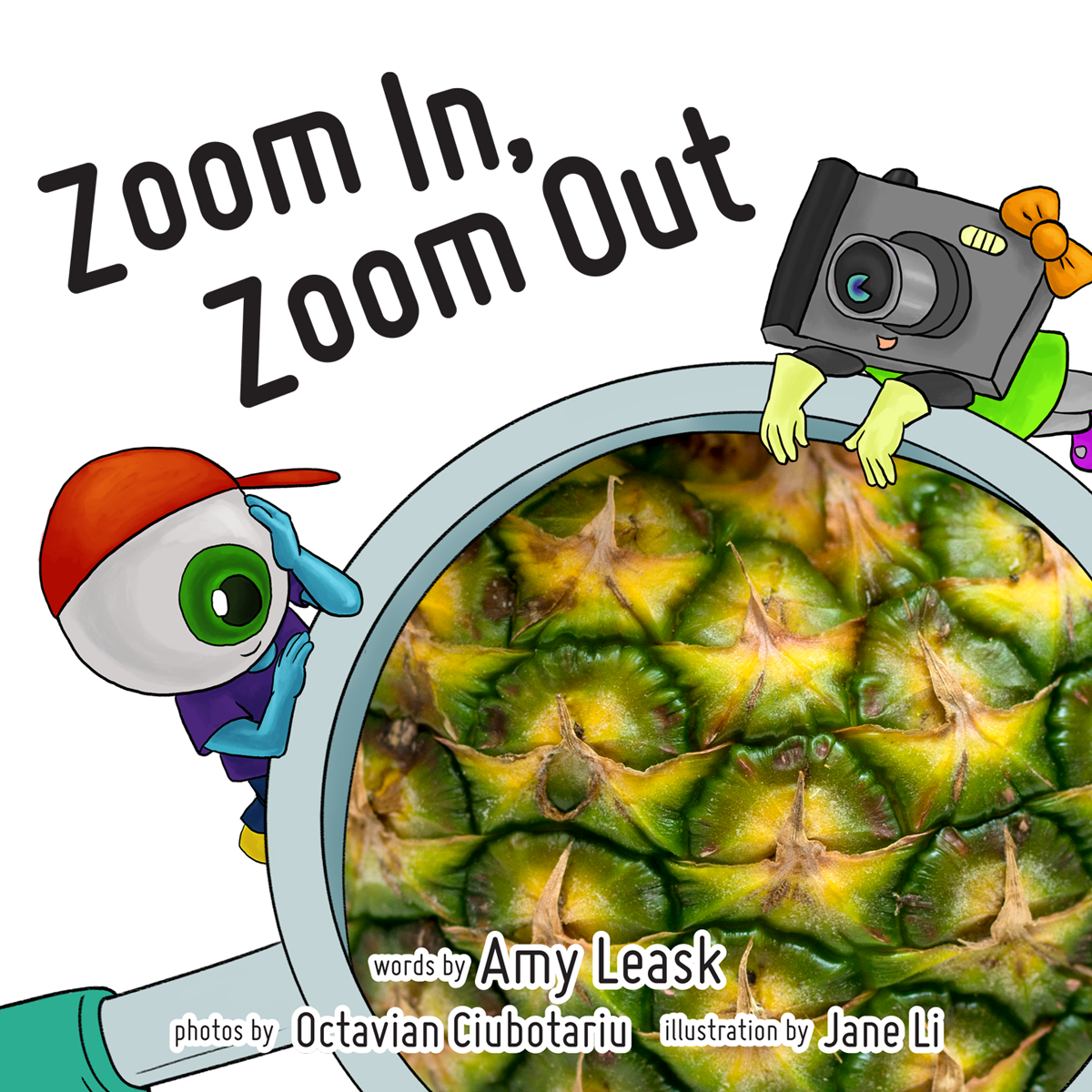
Zoom In, Zoom Out turns this simple idea into a playful guessing game filled with fascinating photographs.
Young readers are challenged to look carefully, make observations, form a guess, and then look again to see whether they were right.
Along the way, children discover that seeing something isn't always the same as understanding it.
This engaging children's nonfiction book encourages kids to slow down, look closely, question their first impressions, and think about how they know what they think they know.
It's a book about eyeballs and cameras.
But most of all, it's a book about looking closer, asking questions, and zooming in and zooming out.
Observation and looking closely
How our eyes and cameras capture images
Visual perception and how appearances can be misleading
Animals and fascinating photographic details
Making observations and forming hypotheses
Questioning first impressions
Critical thinking and asking questions
How changing our perspective can change what we understand
The difference between seeing something and understanding it
Curious kids ages 4–8
Children who love fascinating photographs
Young scientists and careful observers
Parents looking for engaging children's nonfiction
Teachers introducing observation and inquiry skills
Classrooms exploring science, perception, photography, and critical thinking
Families who enjoy interactive books that make children stop, look, guess, and think
Want a free downloadable lesson plan to go with it? Check it out here!
Recommended age: 4–8
Format: Children's nonfiction picture book
Subjects: Animals · Observation · Visual Perception · Photography · Critical Thinking · Science
Key Questions: What am I looking at? Can I trust what I see? What happens when I look closer?
A playful children's nonfiction picture book about observation, visual perception, animals, and critical thinking, for curious kids ages 4–8.
Reader Review Reviewers’ Choice Award, Honorable Mention, 2018
IPPY Awards, Children's E-book, Bronze, 2018
Nautilus Award, Children's Nonfiction, Silver, 2018
International Book Award, Children's Book, Winner, 2018
San Francisco Book Festival Awards, Children's Nonfiction, Runner-Up, 2019
Your eyes take pictures. Cameras take pictures too.
And both can teach us something about the world around us.
But here's the tricky part: sometimes our eyes can fool us.
Look at something from far away and it might seem like one thing. Zoom in closer and you may discover something completely different. A tiny detail can change the whole picture.
Zoom In, Zoom Out turns this simple idea into a playful guessing game filled with fascinating photographs.
Young readers are challenged to look carefully, make observations, form a guess, and then look again to see whether they were right.
Along the way, children discover that seeing something isn't always the same as understanding it.
This engaging children's nonfiction book encourages kids to slow down, look closely, question their first impressions, and think about how they know what they think they know.
It's a book about eyeballs and cameras.
But most of all, it's a book about looking closer, asking questions, and zooming in and zooming out.
Observation and looking closely
How our eyes and cameras capture images
Visual perception and how appearances can be misleading
Animals and fascinating photographic details
Making observations and forming hypotheses
Questioning first impressions
Critical thinking and asking questions
How changing our perspective can change what we understand
The difference between seeing something and understanding it
Curious kids ages 4–8
Children who love fascinating photographs
Young scientists and careful observers
Parents looking for engaging children's nonfiction
Teachers introducing observation and inquiry skills
Classrooms exploring science, perception, photography, and critical thinking
Families who enjoy interactive books that make children stop, look, guess, and think
Want a free downloadable lesson plan to go with it? Check it out here!
Recommended age: 4–8
Format: Children's nonfiction picture book
Subjects: Animals · Observation · Visual Perception · Photography · Critical Thinking · Science
Key Questions: What am I looking at? Can I trust what I see? What happens when I look closer?
Watch the trailer here!