

 Image 1 of 1
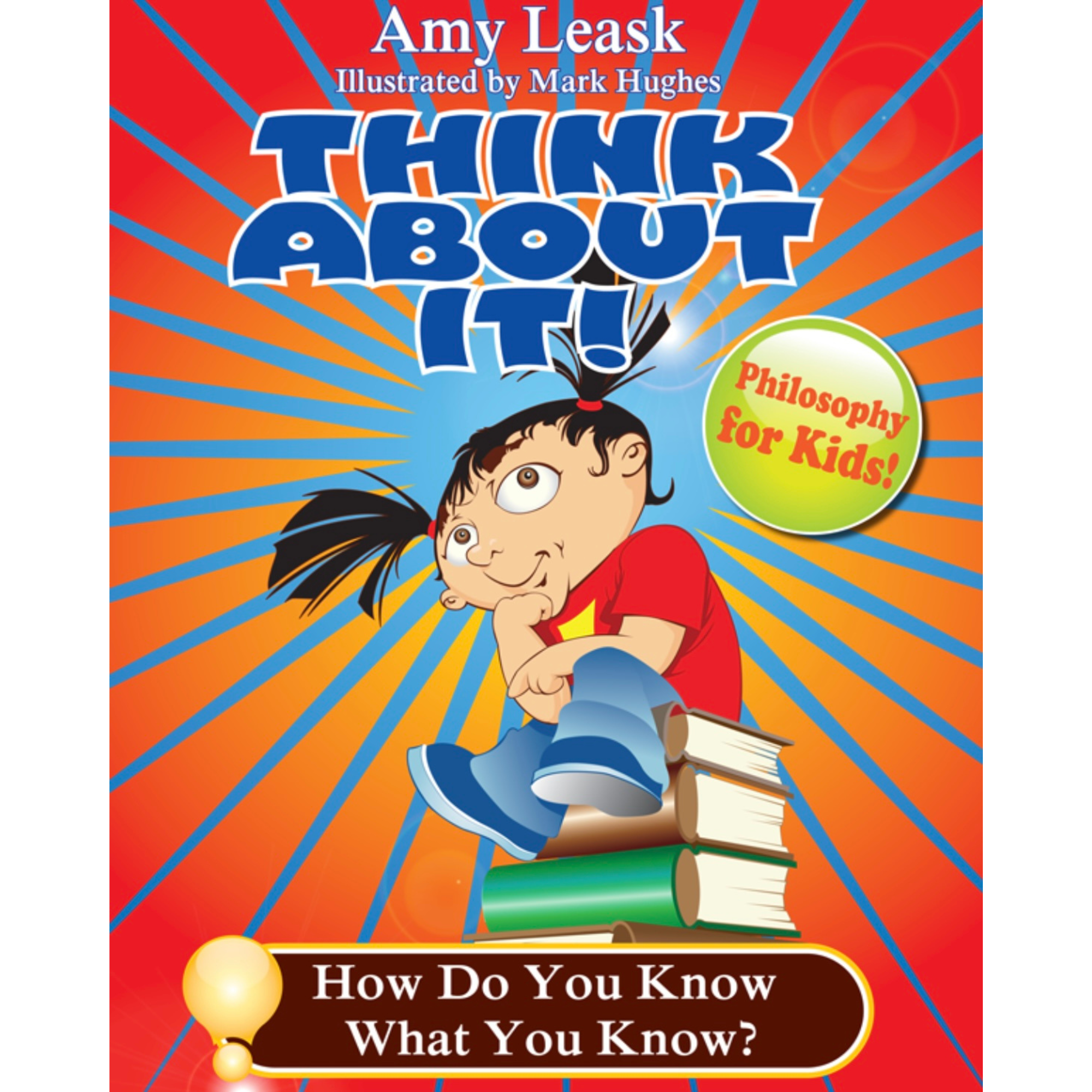
ThinkAboutit: How Do You Know What You Know?
A playful children's philosophy book about knowledge, truth, evidence, perception, and how we know what we know — for curious kids ages 9–12.
How do you know what you know?
Can you trust your five senses?
How do you know when something is true?
Can you be certain about something and still be wrong?
What counts as good evidence?
And how can we tell the difference between knowing something, believing something, and simply thinking something is true?
ThinkAboutIt: How Do You Know What You Know? takes young readers on a philosophical adventure into knowledge, truth, evidence, perception, and reasoning.
Follow Sophia the Wise as she explores some of the biggest questions in philosophy: How do we know what we know? Can our senses be trusted? What makes evidence convincing? And is it possible to know anything for certain?
Along the way, young philosophers meet fascinating thinkers from throughout history and around the world, explore different ideas about knowledge and truth, and try out kid-friendly thought experiments for themselves.
But this isn't a book that simply gives children the answers.
It's an invitation to question, investigate, compare ideas, examine evidence, and think carefully about how we know what we think we know.
With activities, worksheets, conversations, and philosophical experiments, readers get to explore these questions themselves.
Because sometimes the most important question isn't:
“What do you know?”
It's:
“How do you know?”
What kids explore
How we know things
Knowledge and belief
Truth and how we decide whether something is true
Evidence and reasons
Perception and the reliability of our senses
Observation and interpretation
Certainty and uncertainty
Questioning assumptions
How to investigate a claim
Different philosophical ideas about knowledge
Thought experiments and philosophical inquiry
How evidence can change what we believe
Thinking carefully about how we know what we know
Perfect for
Curious kids ages 9–12
Young philosophers who love asking “How do you know?”
Children interested in truth, evidence, and big questions
Parents looking for thoughtful philosophy books for kids
Teachers introducing philosophy, reasoning, and inquiry
Philosophy-for-children programs
Classrooms exploring knowledge, evidence, perception, and critical thinking
Young readers who enjoy thought experiments, activities, worksheets, and open-ended questions
A book about knowledge — not just facts
ThinkAboutIt: How Do You Know What You Know? doesn't simply give young readers more things to know.
It encourages them to think about what knowledge is, how we acquire it, what counts as evidence, and how we can tell whether our beliefs are justified.
In other words, it's an introduction to one of philosophy's oldest and most fascinating questions:
How do you know what you know?
Recommended age: 9–12
Format: Paperback
Pages: 26
Subjects: Philosophy · Epistemology · Knowledge · Truth · Evidence · Perception · Critical Thinking
Activities: Thought Experiments · Worksheets · Philosophical Activities
Big Questions
How do you know what you know?
What is knowledge?
Can we trust our senses?
How can we tell if something is true?
What's the difference between knowing and believing?
What makes evidence good evidence?
Can we ever be completely certain about anything?
Can two people have different beliefs about something and both have good reasons?
And check out the free downloadable lesson plan to go with it!
A playful children's philosophy book about knowledge, truth, evidence, perception, and how we know what we know — for curious kids ages 9–12.
How do you know what you know?
Can you trust your five senses?
How do you know when something is true?
Can you be certain about something and still be wrong?
What counts as good evidence?
And how can we tell the difference between knowing something, believing something, and simply thinking something is true?
ThinkAboutIt: How Do You Know What You Know? takes young readers on a philosophical adventure into knowledge, truth, evidence, perception, and reasoning.
Follow Sophia the Wise as she explores some of the biggest questions in philosophy: How do we know what we know? Can our senses be trusted? What makes evidence convincing? And is it possible to know anything for certain?
Along the way, young philosophers meet fascinating thinkers from throughout history and around the world, explore different ideas about knowledge and truth, and try out kid-friendly thought experiments for themselves.
But this isn't a book that simply gives children the answers.
It's an invitation to question, investigate, compare ideas, examine evidence, and think carefully about how we know what we think we know.
With activities, worksheets, conversations, and philosophical experiments, readers get to explore these questions themselves.
Because sometimes the most important question isn't:
“What do you know?”
It's:
“How do you know?”
What kids explore
How we know things
Knowledge and belief
Truth and how we decide whether something is true
Evidence and reasons
Perception and the reliability of our senses
Observation and interpretation
Certainty and uncertainty
Questioning assumptions
How to investigate a claim
Different philosophical ideas about knowledge
Thought experiments and philosophical inquiry
How evidence can change what we believe
Thinking carefully about how we know what we know
Perfect for
Curious kids ages 9–12
Young philosophers who love asking “How do you know?”
Children interested in truth, evidence, and big questions
Parents looking for thoughtful philosophy books for kids
Teachers introducing philosophy, reasoning, and inquiry
Philosophy-for-children programs
Classrooms exploring knowledge, evidence, perception, and critical thinking
Young readers who enjoy thought experiments, activities, worksheets, and open-ended questions
A book about knowledge — not just facts
ThinkAboutIt: How Do You Know What You Know? doesn't simply give young readers more things to know.
It encourages them to think about what knowledge is, how we acquire it, what counts as evidence, and how we can tell whether our beliefs are justified.
In other words, it's an introduction to one of philosophy's oldest and most fascinating questions:
How do you know what you know?
Recommended age: 9–12
Format: Paperback
Pages: 26
Subjects: Philosophy · Epistemology · Knowledge · Truth · Evidence · Perception · Critical Thinking
Activities: Thought Experiments · Worksheets · Philosophical Activities
Big Questions
How do you know what you know?
What is knowledge?
Can we trust our senses?
How can we tell if something is true?
What's the difference between knowing and believing?
What makes evidence good evidence?
Can we ever be completely certain about anything?
Can two people have different beliefs about something and both have good reasons?
And check out the free downloadable lesson plan to go with it!