

 Image 1 of 1
Watch the trailer here!
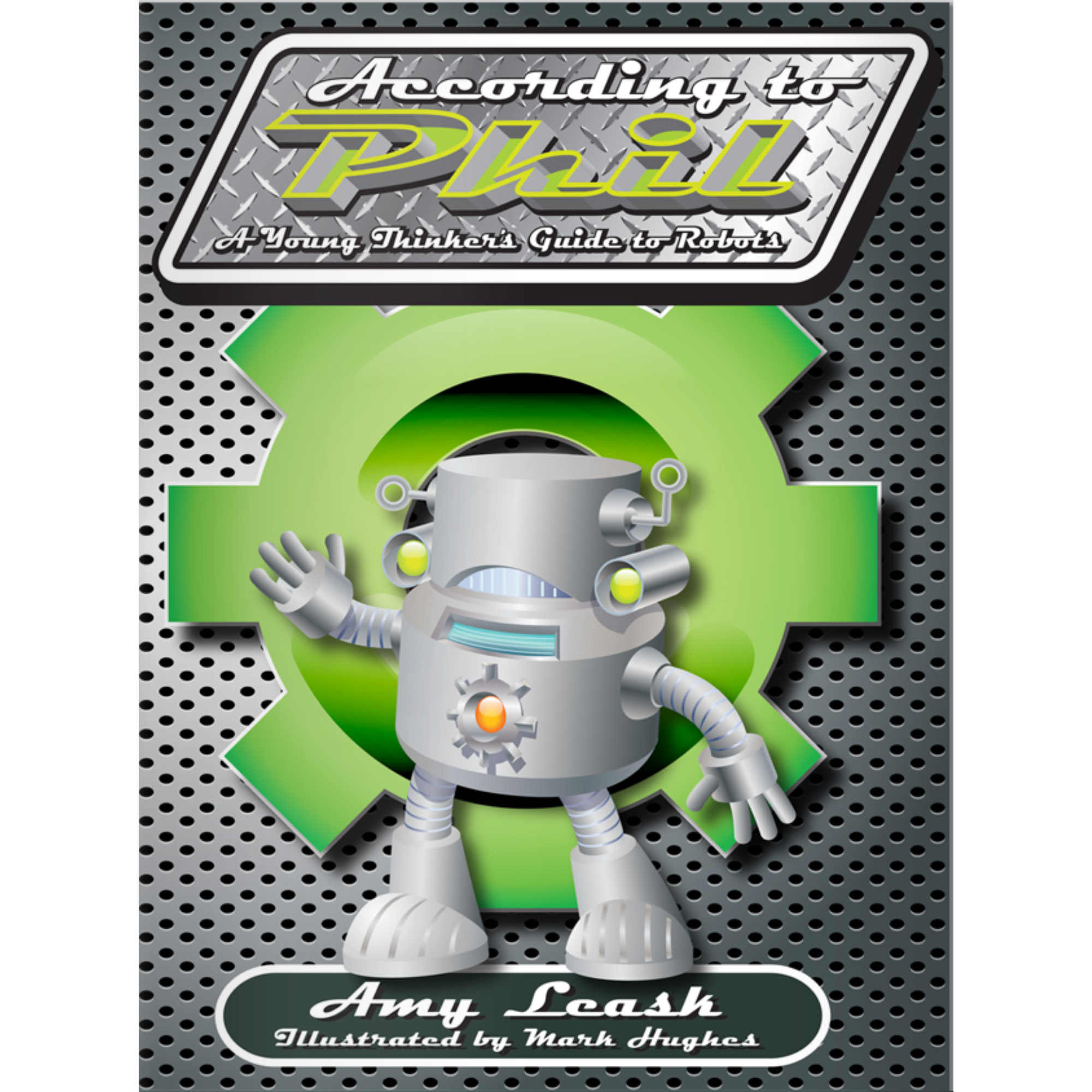
A fun and interactive children's nonfiction book about robots, robotics, technology, and how machines work, for curious kids ages 9–12.
We love robots, right?
But what exactly is a robot? How do robots work? What can they do? And how did we get from imagining robots to building machines that can actually do things for us?
Meet Phil Bot.
He's cool. He's shiny. He's friendly. And he's specially programmed to help young thinkers explore the fascinating world of robots and robotics.
According to Phil: A Young Thinker's Guide to Robots is an engaging introduction to robotics for children ages 9–12. Through facts, illustrations, charts, questions, activities, and worksheets, Phil invites readers to discover what robots are, how they work, what they can do, and how robotic technology has developed over time.
But this isn't just a book for memorizing facts.
Young readers are encouraged to ask questions, make observations, compare robots with humans, organize what they know, and investigate ideas for themselves.
An introduction to what robots are
How robots work and what they can do
Fun and surprising facts about robots
The history and development of robotics and robot technology
Comparisons between robots and humans
Questions and activities that encourage inquiry and observation
Robot-themed worksheets and learning activities
Illustrations, diagrams, and charts that make complex ideas accessible
Opportunities to imagine, investigate, and think like a young roboticist
Robotics and robot technology
How robots work
Sensors, machines, and what robots can do
The history of robots and robotics
How robots are similar to and different from humans
Technology and engineering
Inquiry-based learning and asking questions
Organizing and comparing information
How we learn about new technologies
Curious kids ages 9–12
Children fascinated by robots, machines, and technology
Budding engineers and roboticists
Young readers interested in STEM
Parents looking for engaging children's nonfiction about robotics
Teachers introducing robotics, technology, or engineering
Classrooms exploring inquiry-based learning
Libraries building collections about science, technology, and robotics
Kids who like books that combine facts, activitiesPraise for According to Phil:
And there’s a free bundle of downloadable lesson plans too!
“The writer must have an education background because good practices are embedded in the text. For example, the reader is asked to think about what he knows about robots before he reads, to compare and contrast robots and humans using a graphic organizer, and to "interview" a robot, to name a few of the reader–centered activities in the book. These techniques make the book very appropriate to support both inquiry and good reading practices…The story is full of colorful pictures, drawings, and charts.”
- National Science Teachers’ Association
Paperback
34 Pages
Watch the trailer here!